In today’s digital-driven lifestyle, laptops have become essential tools for work, study, and entertainment. While their convenience is undeniable, prolonged screen exposure brings an overlooked challenge—blue light. This high-energy visible (HEV) light emitted from laptop screens can affect not only your eye health but also your overall well-being.
In this article, we’ll explore the science behind laptop blue light, its effects on vision, possible long-term risks, and practical strategies to reduce its impact.
What Is Blue Light?
Blue light is a type of high-energy visible (HEV) light within the 380–500 nanometer wavelength range. Unlike UV rays, blue light penetrates deep into the eye, reaching the retina. Digital devices such as laptops, smartphones, and tablets emit significant amounts of artificial blue light, which can strain the eyes when exposure is prolonged.
Interestingly, blue light isn’t inherently harmful—it also plays a role in regulating circadian rhythm, improving alertness, and boosting mood during daylight hours. However, constant artificial exposure, especially at night, can create eye strain and disrupt natural sleep cycles.
How Laptop Blue Light Affects Eye Health
Extended laptop use exposes your eyes to intense blue light, and over time, this may lead to digital eye strain or more serious conditions. Let’s break it down:
1. Digital Eye Strain
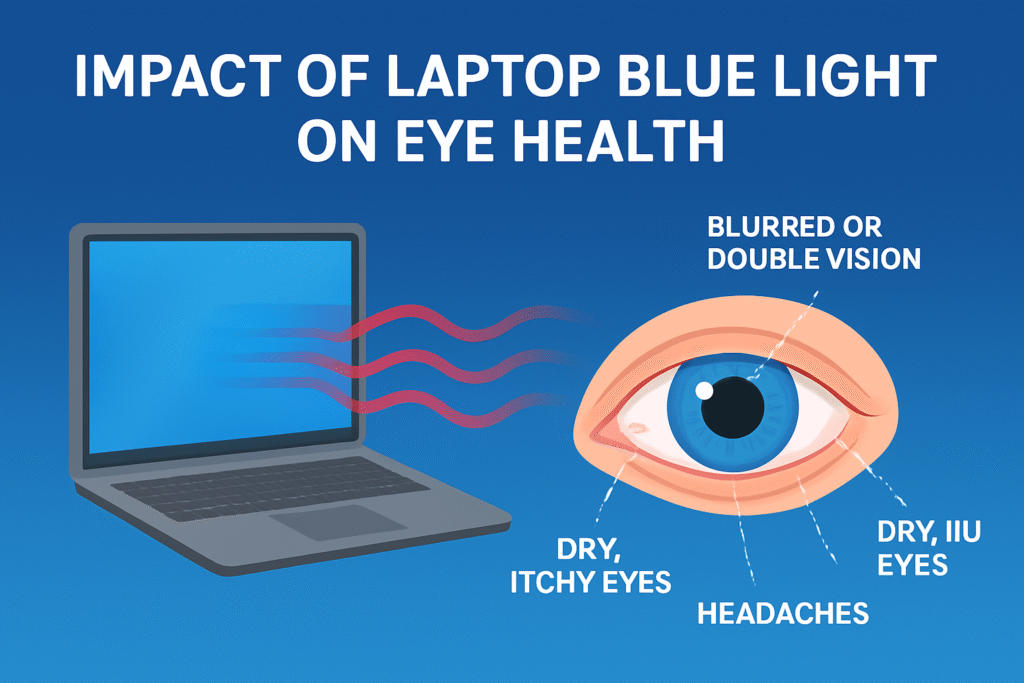
Also known as computer vision syndrome, this occurs when eyes are forced to work harder to focus on digital screens. Symptoms include:
-
Blurred or double vision
-
Dry, itchy eyes
-
Headaches
-
Difficulty focusing
2. Retinal Stress
Blue light penetrates deeply into the retina, potentially causing oxidative stress in retinal cells. This has raised concerns about the risk of age-related macular degeneration (AMD), though more research is still needed.
3. Disrupted Sleep Cycle
Laptop blue light exposure at night tricks the brain into thinking it’s still daylight. This suppresses melatonin production, delaying sleep and reducing rest quality. Poor sleep can indirectly harm eye health by reducing the ability of the eyes to repair and recover overnight.
4. Dry Eyes and Irritation
Constant laptop use reduces blinking frequency by almost 60%, leaving eyes exposed and dry. Combined with blue light exposure, this worsens discomfort and sensitivity.
Long-Term Risks of Laptop Blue Light
While short-term symptoms are uncomfortable, the long-term risks are more concerning:
-
Risk of Macular Degeneration: Continuous blue light exposure may contribute to retinal damage over years.
-
Accelerated Eye Aging: The stress on retinal cells can accelerate visual fatigue and sensitivity.
-
Chronic Sleep Issues: Persistent melatonin disruption leads to insomnia, fatigue, and even cognitive decline.
These risks highlight why eye protection from laptop use is no longer optional—it’s essential.
How to Reduce the Impact of Laptop Blue Light
Protecting your eyes doesn’t mean giving up your laptop—it’s about building healthy digital habits. Here’s a step-by-step approach:
1. Use Blue Light Filters
-
Enable Night Light mode (Windows) or Night Shift (Mac).
-
Install apps like f.lux that adjust screen temperature automatically.
2. Invest in Blue Light Glasses
Special blue light blocking lenses filter harmful wavelengths and reduce strain. They’re especially useful for people working late hours.
3. Follow the 20-20-20 Rule
Every 20 minutes, look at something 20 feet away for 20 seconds. This relaxes the eye muscles and reduces fatigue.
4. Adjust Screen Settings
-
Lower brightness to match room lighting.
-
Increase text size for comfortable reading.
-
Keep contrast levels balanced.
5. Optimize Work Environment
-
Ensure proper room lighting to avoid glare.
-
Sit at least 20–24 inches away from the laptop screen.
-
Keep screens slightly below eye level.
6. Maintain Eye Health Naturally
-
Stay hydrated and eat foods rich in lutein, zeaxanthin, and omega-3 fatty acids (like leafy greens and salmon).
-
Schedule regular eye check-ups to detect early signs of strain or damage.
Is Blue Light Always Bad?
Interestingly, not all blue light is harmful. In moderate amounts, it helps regulate:
-
Sleep-wake cycles
-
Alertness and reaction time
-
Mood balance
The problem lies in overexposure, especially during evening laptop use. Therefore, instead of fearing blue light entirely, it’s more about managing its timing and intensity.
Future Research and Eye Care Innovation
The concern over digital blue light has fueled innovation in screen technology and eye protection solutions. Modern laptops now feature low-blue-light displays, while lens manufacturers offer advanced coatings to filter specific wavelengths.
Ongoing research continues to explore the link between blue light and macular degeneration, aiming to create more effective preventive measures. In the future, we may see smarter screens that adjust blue light exposure based on the time of day and user needs.
Conclusion
The impact of laptop blue light on eye health is undeniable in our increasingly digital lives. From eye strain and dry eyes to potential retinal risks and sleep disruption, the consequences extend beyond simple discomfort.
The good news is, with the right strategies—such as using blue light filters, practicing the 20-20-20 rule, and wearing protective eyewear—you can significantly minimize these risks.
In short, laptops aren’t going away anytime soon, but by taking proactive steps, you can protect your eyes, improve your productivity, and safeguard your long-term vision.
FAQs
1. Does blue light from laptops cause permanent eye damage?
While it contributes to eye strain and potential retinal stress, conclusive evidence on permanent damage like macular degeneration is still under research.
2. Can blue light glasses really protect my eyes?
Yes, blue light blocking glasses filter harmful wavelengths, reducing strain and improving sleep quality, especially during nighttime laptop use.
3. Is blue light only harmful at night?
Blue light exposure during the day helps regulate alertness, but overexposure—especially at night—disrupts melatonin and sleep patterns.
4. How much laptop use is considered safe?
Experts recommend following the 20-20-20 rule and limiting continuous screen time to under 2 hours without breaks.
5. Can diet help protect eyes from blue light damage?
Yes, foods rich in antioxidants like lutein, zeaxanthin, and omega-3s support retinal health and reduce oxidative stress.
6. Do laptops with “low blue light” screens make a difference?
Yes, they significantly reduce exposure to harmful HEV light, making them safer for prolonged use compared to regular displays.